

Busy parking lots, commercial entrances, private roads, and public-use spaces can bring vehicles and pedestrians into close proximity. In West Palm Beach, properties that serve customers, employees, residents, and park visitors need traffic-control features that are easy for drivers to understand and practical for the property.
Speed bumps and bollards can help organize vehicle movement, reduce speeds in appropriate locations, and create clearer separation between vehicles and pedestrian areas.
Quick answer: Speed bumps improve safety by encouraging drivers to slow down in designated low-speed areas, while bollards help restrict or guide vehicle access and protect spaces intended for pedestrians. For commercial businesses and parks in West Palm Beach, these features can support safer parking lots, crossings, entrances, walkways, loading areas, and other locations where vehicles and people interact.
What West Palm Beach Property Owners Should Know
-
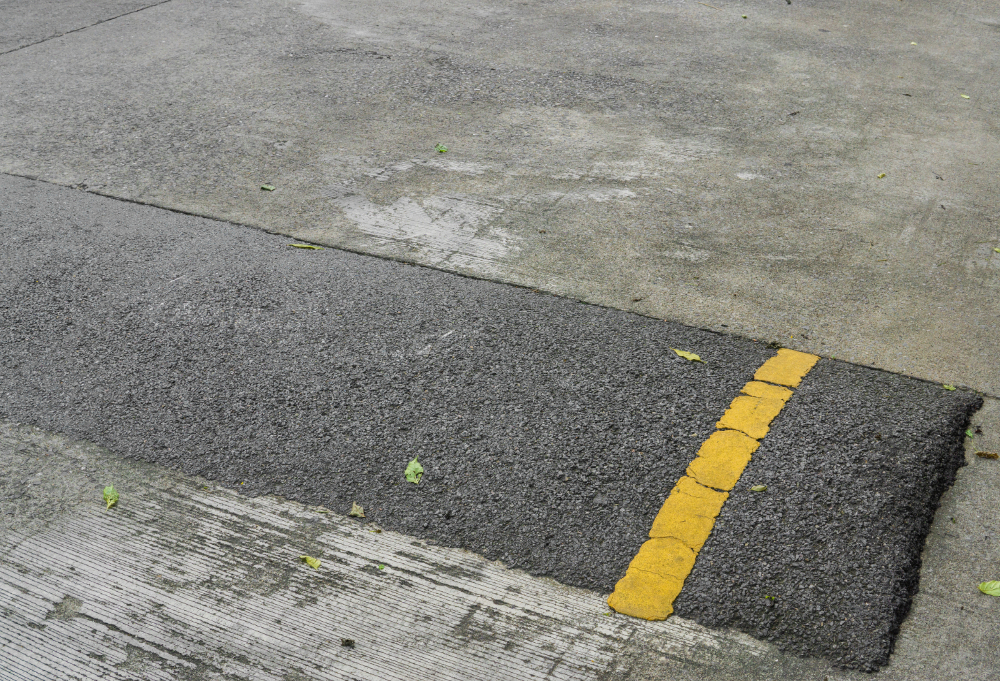
Speed bumps are most useful where controlling vehicle speed is the primary concern, particularly on private drives and within parking areas.
-
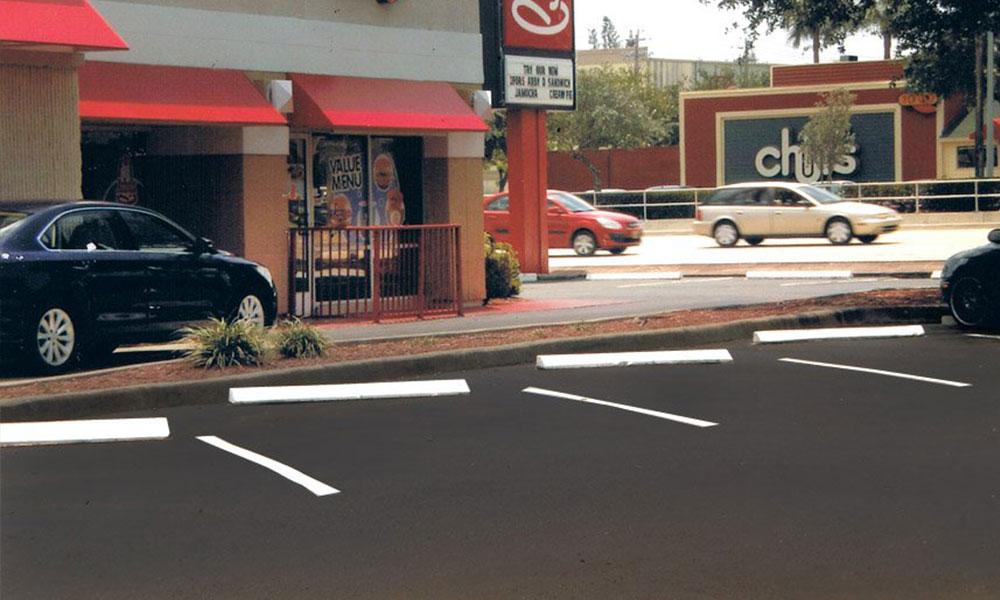
Bollards can help define boundaries between vehicle lanes and pedestrian spaces near storefronts, sidewalks, entrances, and recreational areas.
-
Busy destinations near Downtown West Palm Beach and surrounding commercial districts may benefit from clearly defined traffic and pedestrian zones.
-
Placement matters because poorly located traffic-control features can interfere with drainage, accessibility, deliveries, or normal traffic circulation.
-
Pavement condition should be evaluated before installing features that will be anchored to or constructed on an existing asphalt surface.
Why Traffic Control Matters for West Palm Beach Properties
Traffic control matters for West Palm Beach properties because parking lots, access roads, storefronts, and recreational spaces often accommodate several types of users at the same time. Drivers may be searching for parking while pedestrians cross travel lanes, delivery vehicles enter loading areas, and visitors move between buildings and sidewalks.
Properties throughout Palm Beach County can experience year-round vehicle and pedestrian activity. Commercial areas near Downtown, Northwood, and major corridors such as Okeechobee Boulevard may have different traffic patterns than a neighborhood park or private commercial complex.
All American Asphalt LLC understands that pavement and traffic-control features need to work together. We look at how vehicles use the paved area, where pedestrians travel, and how improvements can support a more organized property.
Local Data or Field Observations
Local traffic-safety planning should be based on the actual layout and use of each property rather than a one-size-fits-all installation. The appropriate solution depends on factors such as vehicle routes, pedestrian paths, parking configurations, pavement condition, drainage, entrances, and the intended function of the site.
For a West Palm Beach commercial property, a speed-control concern might occur along a straight parking-lot aisle where drivers tend to accelerate. At a park, the greater concern may be preventing vehicles from entering a walkway or gathering area.
These different situations call for different solutions. A site evaluation can help determine whether speed bumps, bollards, pavement improvements, or a combination of measures makes sense.
Local Impact of Better Vehicle and Pedestrian Separation
Better vehicle and pedestrian separation can make commercial and recreational properties easier to navigate while reducing unnecessary conflicts between different users. Clearly defined travel areas tell drivers where vehicles belong and give pedestrians more predictable places to walk.
This can be especially useful at shopping centers, office properties, multifamily communities, municipal-style facilities, and parks throughout the West Palm Beach area.
Florida’s frequent rain also makes clear site organization valuable. During wet weather, drivers may have reduced visibility and pedestrians may choose different walking routes to avoid standing water. Traffic-control features should therefore complement the property’s pavement markings, drainage, lighting, and overall circulation plan rather than functioning as isolated additions.
Warning Signs Your Property May Need Better Traffic Control
A property may need speed bumps, bollards, or other traffic-control improvements when vehicle behavior repeatedly creates conflicts with pedestrians or designated property areas. Property managers should pay attention to recurring patterns rather than waiting for a serious incident.
Common warning signs include:
-
Vehicles regularly traveling faster than appropriate through a parking area.
-
Drivers cutting across areas that were not intended as travel lanes.
-
Vehicles getting unusually close to storefronts, walkways, equipment, or gathering spaces.
-
Pedestrians frequently crossing active vehicle lanes without clearly defined separation.
-
Drivers using restricted areas as shortcuts.
-
Existing traffic-control features that are loose, damaged, faded, or difficult to see.
-
Pavement deterioration around existing speed-control or protective features.
-
Changes in property use that have increased traffic or altered circulation patterns.
When to Call a Professional
Professional help is appropriate when a traffic-control improvement will affect pavement, drainage, vehicle circulation, accessibility, or permanent site features. Property owners can observe traffic patterns and identify problem areas, but permanent installation requires more careful consideration.
For example, adding a speed bump without considering how stormwater moves across the pavement could create an unintended drainage problem. Bollards installed in the wrong location could interfere with pedestrian access, parking maneuvers, deliveries, or emergency access.
Before making permanent changes at a commercial property or park, applicable local requirements and property-specific restrictions should also be confirmed.
Common Local Causes of Traffic-Safety Problems
The most common traffic-safety problems on local commercial properties come from vehicle speed, unclear boundaries, changing traffic patterns, and deteriorated pavement or markings. West Palm Beach properties can experience these issues in several ways.
1. Long, Open Parking-Lot Aisles
A straight, unobstructed drive aisle can encourage some motorists to pick up speed. Strategically planned speed-control measures can reinforce the low-speed nature of the property.
2. Poor Separation Near Pedestrian Areas
Storefront entrances, sidewalks, park paths, and gathering areas can benefit from physical separation where vehicles should not enter. Bollards are one option for creating a visible boundary.
3. Faded Pavement Markings
South Florida sun, rain, traffic, and normal pavement wear can make markings less visible over time. When directional markings become difficult to read, drivers may be less certain about intended traffic flow.
4. Changes in Property Use
A Palm Beach County property may experience different traffic patterns after tenant changes, redevelopment, new amenities, or increased visitor activity. A layout that once worked well may eventually need adjustment.
5. Pavement Deterioration
Cracking, depressions, potholes, and other pavement problems can cause drivers to make unexpected movements. Addressing pavement condition can be an important part of improving overall site circulation.
Prevention and Maintenance
Regular inspections and timely pavement maintenance help speed bumps, bollards, markings, and surrounding asphalt continue functioning as intended. Commercial property managers should periodically walk the site and look at the property from both a driver’s and pedestrian’s perspective.
Check speed-control features for visible damage and inspect bollards for movement, impact damage, or deterioration around their bases. Pavement markings should remain understandable, and nearby asphalt should not have significant failures.
In West Palm Beach, inspections after periods of heavy rain can also reveal drainage issues or pavement deterioration that may affect traffic-control areas.
DIY monitoring is useful, but repairs involving asphalt, permanently installed traffic features, or changes to circulation should be evaluated professionally.
Expected Results From Traffic-Control Improvements
Properly planned traffic-control improvements should create more predictable vehicle behavior and clearer boundaries throughout the property. Drivers should be able to recognize where they need to slow down, where they can travel, and which areas are restricted from vehicle access.
Speed bumps will not replace signs, pavement markings, good lighting, or responsible driving. Bollards likewise cannot eliminate every possibility of vehicle intrusion.
The goal is a coordinated site where pavement design, markings, traffic-control features, and pedestrian routes work together.
Common Mistakes to Avoid
The biggest mistakes involve installing traffic-control features without considering the complete parking lot or site layout. A feature that solves one problem can create another when placement is not carefully planned.
Mistake: Installing speed bumps wherever speeding is observed.
Consequence: The location may interfere with drainage or normal vehicle circulation.
Better approach: Evaluate traffic flow, pavement condition, and water movement before installation.
Mistake: Using bollards without considering pedestrian movement.
Consequence: Poor placement may make walkways or entrances less convenient.
Better approach: Plan bollard locations around both vehicle restrictions and pedestrian access.
Mistake: Ignoring deteriorated asphalt.
Consequence: Installing new features over failing pavement may leave the surrounding surface needing additional work.
Better approach: Address significant pavement problems as part of the project planning process.
Mistake: Treating every property the same.
Consequence: A retail parking lot near Downtown West Palm Beach has different needs from a park, warehouse, office complex, or multifamily property.
Better approach: Match the solution to actual site use.
A Common Local Scenario
A common local scenario involves a commercial parking lot where vehicles accelerate along a long drive aisle that also serves storefront pedestrian traffic. Customers regularly cross the aisle between parked vehicles and the building, creating a location where slower and more predictable vehicle movement would be beneficial.
The property manager might consider speed-control measures near key pedestrian areas while also reviewing markings and pavement condition. Bollards could be considered separately where vehicles need to be kept away from a storefront, walkway, utility area, or other protected space.
This is an illustrative scenario, not a specific All American Asphalt LLC project.
Related Service Solutions
Related asphalt and parking-area services can help create a more complete solution when traffic-control concerns are connected to pavement condition or site organization. Depending on the property, the appropriate work may involve repairing pavement before traffic-control features are added or coordinating improvements with other parking-lot needs.
We can help property owners evaluate asphalt-related conditions and discuss options appropriate for the site.
Comparing Speed Bumps and Bollards
Speed bumps and bollards solve different problems, so the best option depends on whether the priority is reducing vehicle speed or restricting vehicle access.
| Option | Primary Purpose | Common Applications |
|---|---|---|
| Speed bumps | Encourage lower vehicle speeds | Parking lots, private drives, internal access lanes |
| Bollards | Restrict or guide vehicle access | Storefronts, walkways, entrances, protected areas |
| Both | Combine speed management with physical separation | Busy commercial or recreational properties |
Some West Palm Beach properties may benefit from both, while others may need only one solution. Site layout should guide the decision.
Service Areas
Our local service focus includes West Palm Beach and surrounding Palm Beach County communities where commercial pavement and property-access improvements are needed. Depending on project requirements, nearby areas may include Palm Beach, Lake Worth Beach, Riviera Beach, and other surrounding communities.
Cost of Ignoring Traffic-Control Problems
Ignoring recurring traffic-control problems can allow pavement damage, confusing circulation, and vehicle-pedestrian conflicts to continue. Waiting may also mean that a property eventually needs to address several connected issues at once, such as damaged pavement, worn markings, and deteriorated traffic-control features.
For commercial businesses, unclear circulation can also create unnecessary frustration for customers, tenants, employees, and delivery drivers.
Frequently Asked Questions
Do speed bumps help commercial parking lots in West Palm Beach?
Yes, speed bumps can help encourage lower vehicle speeds in appropriate commercial parking-lot locations in West Palm Beach. They are most useful when placement supports the site’s overall circulation plan. Pavement condition, drainage, pedestrian crossings, and normal vehicle routes should all be considered before installation.
Where should bollards be used on a commercial property?
Bollards are commonly considered where a property needs a visible physical boundary between vehicles and a restricted or pedestrian-oriented area. Potential locations include storefronts, walkways, entrances, equipment areas, and other spaces where vehicle access should be controlled. Appropriate placement depends on the site’s design and access requirements.
Can a West Palm Beach park use both speed bumps and bollards?
Yes, a West Palm Beach park may use speed bumps and bollards for different traffic-management purposes. Speed bumps can encourage slower driving on appropriate vehicle routes, while bollards can help prevent or limit vehicle access to pedestrian paths, gathering spaces, or other restricted areas.
Does South Florida weather affect traffic-control installations?
Yes, South Florida conditions should be considered when planning pavement and traffic-control improvements. Frequent rain, strong sunlight, heat, and normal traffic wear can affect asphalt, pavement markings, and surrounding surfaces. Drainage is particularly important because a new feature should not unintentionally interfere with the property’s existing water flow.
Should damaged pavement be repaired before installing a speed bump?
Significantly deteriorated pavement should generally be evaluated before a new speed-control feature is installed. Cracks, depressions, potholes, or unstable areas may require attention so the installation is integrated with a suitable pavement surface. A professional evaluation can help determine the appropriate sequence of work.
Are speed bumps appropriate for every Palm Beach County parking lot?
No, speed bumps are not automatically appropriate for every Palm Beach County parking lot. Traffic patterns, drainage, vehicle types, pedestrian routes, accessibility considerations, and property requirements all matter. Some locations may benefit more from markings, signage, circulation changes, bollards, pavement repairs, or a combination of measures.
How do I know whether my property needs bollards or speed bumps?
Choose based on the problem you are trying to solve: speed bumps address vehicle speed, while bollards primarily address vehicle access and separation. If both problems exist, a coordinated approach may make sense. Observing where speeding, shortcuts, or pedestrian conflicts repeatedly occur can help identify priorities.
How often should West Palm Beach property managers inspect traffic-control features?
Property managers should inspect traffic-control features regularly and after events or conditions that could cause visible damage. In West Palm Beach, it is also useful to check pavement and drainage around these areas following periods of heavy rain. Loose, damaged, faded, or deteriorated features should receive prompt attention.
Create a Safer, Better-Organized Property in West Palm Beach
A well-planned commercial pavement area should make vehicle routes and pedestrian spaces easy to understand. We can help evaluate asphalt-related conditions and traffic-control needs so you can determine which improvements make sense for your property.