When a tropical storm stalls over the coast, the first thing many property managers notice is not the wind. It is the water sitting in the parking lot the next morning, the pothole that opened overnight near the entrance, and the faded fire lane nobody can see under a layer of debris. For commercial properties and HOA communities in West Palm Beach and across South Florida, the condition of the asphalt before a storm often decides how much damage there is to deal with after it.
Quick Answer
To prepare a commercial parking lot or HOA roads for hurricane season in South Florida, repair cracks and potholes, correct low spots that hold water, seal coat aging asphalt, refresh striping, and check that speed bumps, bollards, and drainage structures are secure. The best time to do this work is during the drier months between hurricane seasons, so repairs can cure properly and crews are not working around daily afternoon storms.
What Property Managers and HOA Boards Should Know
Hurricane preparation for pavement is mostly about keeping water out of the base and keeping traffic moving safely after a storm.
- The Atlantic hurricane season runs from June 1 through November 30, so the months just after it ends are the natural window to plan next year’s work.
- South Florida’s summer rainy season brings frequent heavy downpours even without a named storm, which tests every crack and low spot in a lot.
- Water that reaches the rock base through open cracks weakens support from below and leads to potholes and sinking.
- Clear striping and visible safety devices matter more after a storm, when residents, customers, and emergency vehicles need to move through debris.
- Board approvals and budget cycles take time, so communities in Palm Beach, Broward, and Martin Counties that start planning early usually have more scheduling options.
Why Parking Lot Storm Readiness Matters in West Palm Beach
Parking lot storm readiness matters in West Palm Beach because local pavement faces heavy rain, a high water table, and strong sun in the same year, and a hurricane only magnifies weaknesses that already exist. A lot with sealed surfaces, tight cracks, and proper slope sheds water. A lot with open cracks and sunken areas holds it.
The properties that feel this most are the ones people depend on during and after a storm: shopping plazas along Okeechobee Boulevard, gated HOA communities in Wellington and Jupiter, medical offices, and condominium lots near the Intracoastal. Many communities west of I-95 sit on flat, low-lying land where water has few places to go, so every depression in the asphalt becomes a puddle that lingers.
All American Asphalt LLC has worked through these conditions for more than 30 years. We are a licensed paving contractor in Palm Beach County, also licensed in Broward and Martin Counties, and we are bonded and insured with an A+ rating from the Better Business Bureau. We serve HOAs, commercial parking lots, and municipalities, and we plan our work to keep disruption to residents and tenants as low as possible.
What We See on South Florida Pavement After Storm Seasons
The patterns we see on South Florida pavement after storm seasons are consistent, and they are general professional observations rather than measured data:
- Cracks that were hairline in spring often widen by fall after months of daily rain soaking the base.
- Ponding near storm drains, curb lines, and building entrances tends to return in the same spots after every heavy rain.
- Asphalt that has gone several years without seal coating turns gray, loses fine material, and breaks apart faster once water gets in.
- Oil and fluid stains in parking stalls soften the surface, and those soft spots tend to fail first in wet weather.
- Fallen tree limbs and debris can scrape and gouge pavement and damage painted markings during cleanup.
How Storm Damage Affects HOAs and Commercial Properties
Storm damage affects HOAs and commercial properties through safety risks, unplanned repair costs, and disruption to the people who live, shop, and work there. A pothole hidden under standing water is a hazard to drivers and pedestrians. A flooded entrance can keep customers away from a retail center in Boynton Beach or Delray Beach for days.
For HOA boards, unplanned road repairs can pull from reserves meant for other projects. For commercial owners, damaged pavement can lead to tenant complaints and liability concerns. Addressing the pavement before the season starts turns an emergency repair into a scheduled maintenance item.
Warning Signs Your Pavement Is Not Ready for Hurricane Season
The clearest warning signs are open cracks, standing water, and faded or damaged safety features, because each one gets worse quickly once heavy rain arrives. Walk your property and look for:
- Cracks wider than a hairline, especially long cracks running through drive aisles or HOA road lanes.
- Alligator or spiderweb cracking, which often means the base underneath is already weakening.
- Water that stays in the same low spots for hours after a typical afternoon thunderstorm.
- Potholes or crumbling edges near entrances, dumpster pads, and storm drain inlets.
- Gray, dry asphalt that sheds loose gravel when swept.
- Faded fire lanes, crosswalks, stop bars, or parking stall lines.
- Cracked or loose speed bumps and leaning or damaged bollards.
When to Call a Professional Paving Contractor
Call a professional paving contractor when cracks are spreading, water is ponding regularly, or any pothole has formed, since those problems need base repair and hot mix asphalt that maintenance staff cannot safely provide. Property teams can handle the monitoring: photograph problem areas after heavy rain, keep storm drains and inlets clear of leaves and debris, and keep a simple log of changes.
In South Florida, the threshold comes sooner than many owners expect. A crack that is easy to ignore in March can let in enough water during the rainy season to become a pothole by August, often right when contractors are busiest.
Common Causes of Storm-Related Pavement Damage
The most common causes of storm-related pavement damage in South Florida are water intrusion, poor drainage, and asphalt that has already been weakened by sun and age.
- Water intrusion through cracks. Rain enters open cracks, softens the rock base, and traffic then pushes the surface down into potholes.
- Poor drainage and low spots. Flat terrain and sunken areas let water sit on the surface, slowly breaking down the asphalt.
- UV oxidation. Intense year-round sun dries out unsealed asphalt, making it brittle and more likely to crack.
- Heavy loads on wet pavement. Delivery trucks, garbage trucks, and cleanup crews put extra stress on softened pavement after storms.
- Tree roots and debris. Roots lift pavement edges, and fallen limbs or heavy equipment can gouge the surface during cleanup.
Prevention and Maintenance: A Seasonal Prep Plan
The most effective prevention plan follows South Florida’s seasons, with major work done in the drier months and quick checks once storm season begins.
- Late fall and winter (December to February): Walk the property, document damage from the past season, and request estimates so boards and owners can budget.
- Early spring (March to April): Complete pothole repairs, patching, milling, and any overlays while weather is more predictable.
- Late spring (May): Seal coat sound asphalt and restripe the lot so markings are crisp before the season starts June 1.
- During the season (June to November): Keep drains clear, inspect after major rain events, and schedule prompt repairs for new damage.
We recommend seal coating about every two years to protect asphalt from water penetration, oil, and UV damage. DIY should stop at observation and drain clearing; patching, sealing, and striping need proper materials and equipment.
Expected Results from Pre-Season Paving Work
Pre-season paving work should give you a surface that sheds water better, fewer weak spots for storms to exploit, and clear markings that help traffic move safely after a storm. No pavement is storm-proof, and severe flooding can still cause damage. Well-maintained asphalt generally recovers faster and needs smaller repairs than neglected pavement.
Common Mistakes Before Hurricane Season
The most common mistake is waiting until a storm is in the forecast to address pavement problems, when there is no longer time to fix them properly.
- Mistake: Scheduling repairs in June or July. Consequence: Daily storms interrupt work and contractor calendars are full. Better approach: Book repairs in the drier months.
- Mistake: Seal coating over open cracks and potholes. Consequence: Water still reaches the base, and the sealer cannot hold damaged pavement together. Better approach: Repair first, then seal.
- Mistake: Repaving without correcting low spots. Consequence: Water ponds in the same places on the new surface. Better approach: Base up low areas and adjust drainage structures as part of the project.
- Mistake: Skipping restriping after sealing. Consequence: Fire lanes and crosswalks are hard to see when they matter most. Better approach: Plan striping with every seal coat.
Common Local Scenario
This is a common local scenario, not a case study. An HOA board in a gated community in western Palm Beach County notices that the main entrance road floods after every heavy afternoon storm, and two potholes have formed near the guard gate. Speed bumps along the main road are cracked, and stop bars have faded. The board requests an estimate in winter, approves pothole repairs, base work in the low area, and an overlay of the entrance road in early spring, then seal coats the rest of the community roads, repaints the speed bumps, and restripes before June.
Related Service Solutions for Storm Readiness
Our storm readiness services cover each weak point a hurricane season exposes, from the surface down to the base, so HOAs and commercial owners can handle preparation with one licensed team.
- Pothole repair and patchwork: Saw cutting, excavation, base repair, and repaving for potholes, root damage, oil damage, and sinkholes.
- Asphalt overlays: A new layer of hot mix asphalt over existing pavement to add thickness, strength, and a smooth finish, with leveling or base rework when needed.
- Low spot and drainage-related prep: Basing up low-lying areas before paving and adjusting existing drainage structures to match new pavement elevations.
- Asphalt milling: Removing worn surface material at transitions and problem areas before resurfacing.
- Seal coating: A two-coat professional-grade sealer that helps prevent water penetration, resists oil and petrochemicals, and slows UV oxidation.
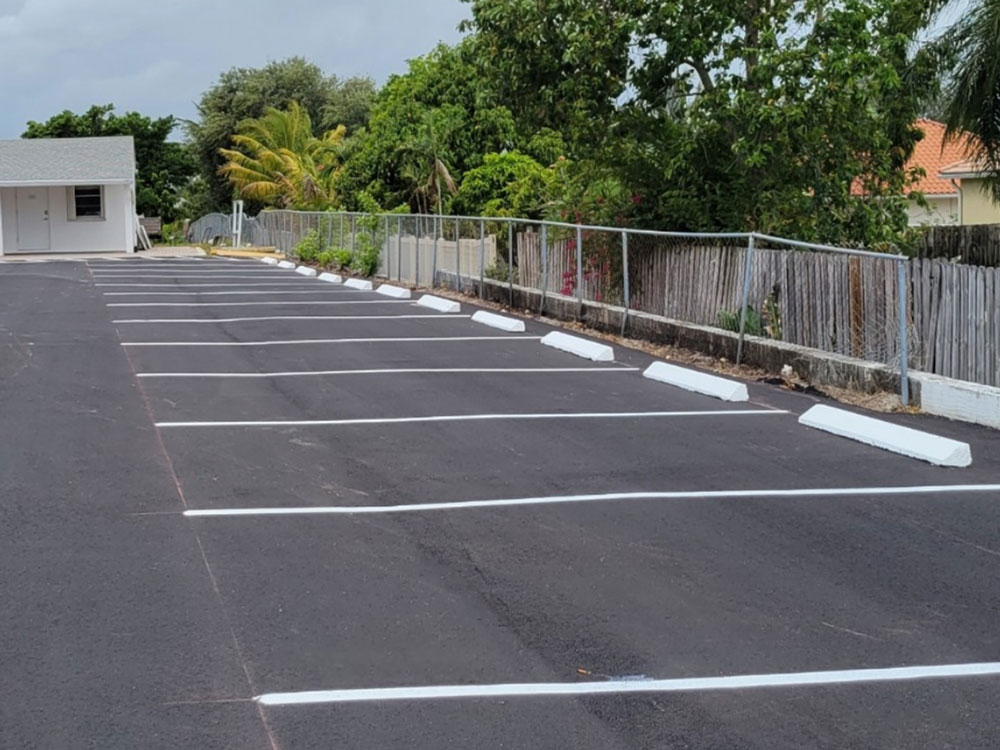
- Striping and pavement marking: Fire lanes, crosswalks, stop bars, and parking stalls using D.O.T. approved traffic paint.
- Speed bump and bollard safety upgrades: Installation and repair of speed bumps, humps, and tables, plus bollards that protect walkways, entrances, fire hydrants, and utility pipes.
Same-day service is available for certain jobs in West Palm Beach, Fort Lauderdale, Plantation, and Davie, and all other work is scheduled.
Comparing Your Options Before Storm Season
The right pre-season option depends on how much damage has reached the base, and catching problems early usually keeps the scope and cost smaller.
| Option | Best For | Timing | Storm Readiness Benefit |
|---|---|---|---|
| Seal coating and striping | Sound asphalt that is faded or oxidized | Late spring, after repairs | Helps keep water out and restores visible markings |
| Pothole and crack repair | Isolated damage and failed spots | As soon as damage appears | Stops water from reaching the base in weak areas |
| Mill and overlay | Widespread surface wear with a stable base | Dry months, planned in advance | Adds strength and a smooth, uniform surface |
| Base repair and reconstruction | Chronic ponding, sinking, or failed base | Dry months, with planned closures | Corrects the underlying cause of repeat failures |
Service Areas
We serve HOAs, commercial properties, and municipalities throughout West Palm Beach, Palm Beach Gardens, Jupiter, Wellington, Lake Worth, Boynton Beach, Delray Beach, and Boca Raton. We also work in Martin County communities such as Stuart and Palm City, and in Broward County cities including Fort Lauderdale, Pompano Beach, and Deerfield Beach.
The Cost of Waiting Until a Storm Is Coming
The cost of waiting until a storm is coming is usually larger repairs, longer disruption, and fewer scheduling options. Water that enters open cracks during the rainy season weakens the base, and what could have been a crack repair and seal coat can become patching or a full overlay.
After a major storm, demand for paving work rises across Palm Beach, Broward, and Martin Counties at the same time, which can stretch timelines for properties that need repairs. Planning in the off-season keeps your property ahead of that rush.
Schedule Your Pre-Season Assessment
FAQ
When should I prepare my West Palm Beach parking lot for hurricane season?
The best time to prepare a West Palm Beach parking lot for hurricane season is between December and May, before the season begins June 1. Drier weather in those months allows repairs, seal coating, and striping to be completed and cured without daily afternoon storms interrupting the work.
Does seal coating help protect asphalt before storm season in Florida?
Yes, seal coating helps protect asphalt before storm season by helping prevent water penetration and slowing UV damage from Florida sun. It works best on pavement in good structural condition, so cracks and potholes should be repaired before sealing. We recommend seal coating about every two years.
How can HOA boards plan road maintenance before hurricanes?
HOA boards can plan road maintenance before hurricanes by walking community roads in late fall, documenting damage, and requesting estimates early enough to approve work in the board’s budget cycle. Scheduling repairs in spring gives time for seal coating and restriping before June.
What causes water to pond in parking lots in Palm Beach County?
Water ponds in Palm Beach County parking lots mainly because of low spots, settled base material, and flat terrain that gives water few places to drain. Correcting these areas usually means basing up the low spots and adjusting drainage structures before new asphalt is placed.
Should I fix potholes before hurricane season in Broward County?
Yes, potholes in Broward County should be repaired before hurricane season because water entering a pothole spreads into the surrounding base and enlarges the damage. Potholes hidden under standing water after a storm are also a safety hazard for drivers and pedestrians on your property.
Can an asphalt overlay make pavement more storm resilient in West Palm Beach?
An asphalt overlay can improve pavement in West Palm Beach by adding thickness, strength, and a smooth surface that sheds water more evenly. It is a good fit when the base is still stable. Pavement with a failed base usually needs base repair first.
Why are speed bumps and bollards part of storm preparation?
Speed bumps and bollards are part of storm preparation because damaged devices become hazards when traffic returns after a storm. Secure, freshly painted speed bumps keep vehicles slow through debris, and bollards help protect walkways, entrances, and utilities from vehicles navigating crowded or partly blocked lots.
Do you offer free estimates for storm prep paving work?
Yes, we offer free estimates for storm preparation work on commercial parking lots, HOA roads, and municipal properties. An estimate starts with an assessment of the surface, base, and drainage so the recommended work matches what your pavement actually needs before the season.
Hurricane season will always bring uncertainty to South Florida, but the condition of your pavement does not have to be one of the unknowns. With more than 30 years of experience across Palm Beach, Broward, and Martin Counties, we are ready to help you prepare your property calmly and on your schedule.
Get Your West Palm Beach Property Storm-Ready Before June
Our licensed, bonded, and insured team will help you plan repairs and maintenance that protect your pavement before the next season begins.