

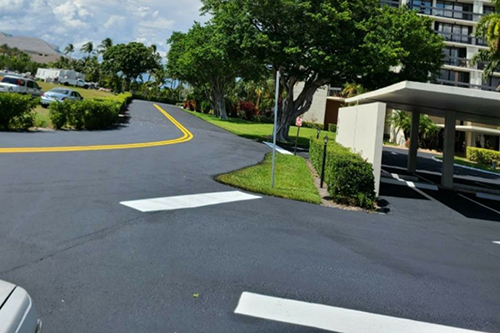
Choosing between asphalt and concrete for an HOA road or commercial parking lot in West Palm Beach is more than a matter of appearance. South Florida’s intense sunshine, heavy seasonal rainfall, high humidity, and year-round vehicle traffic can affect how pavement performs over time.
For HOA boards, property managers, and commercial property owners, the right pavement choice can influence maintenance budgets, drainage performance, resident satisfaction, and long-term repair costs.
Quick Answer: Asphalt is often the more practical choice for HOA roads and commercial parking lots in West Palm Beach because it generally costs less to install, can be repaired more easily, and allows for faster maintenance. Concrete can offer a longer service life under suitable conditions and may be preferable for certain heavy-load areas. However, neither material is immune to South Florida’s heat, rain, and sun. Proper drainage, installation, pavement thickness, and ongoing maintenance are essential to long-term performance.
What West Palm Beach Property Owners Should Know
-
Asphalt generally has a lower initial installation cost than concrete, making it attractive for large HOA communities and commercial parking facilities.
-
Concrete typically reflects more sunlight than conventional dark asphalt, which can reduce pavement surface temperatures in exposed parking areas.
-
West Palm Beach’s rainy season makes drainage critical because standing water can weaken pavement foundations and accelerate deterioration.
-
Asphalt repairs are usually faster and less disruptive, which benefits busy retail centers, office complexes, and residential communities.
-
Both materials require professional evaluation to determine whether the existing base, drainage system, and expected traffic loads support long-term performance.
How South Florida’s Climate Affects Asphalt and Concrete
South Florida’s climate affects asphalt and concrete differently because the materials respond to heat, moisture, and ultraviolet exposure in distinct ways. In West Palm Beach, pavement must withstand prolonged sunshine, frequent summer thunderstorms, and periods of intense rainfall without losing structural stability or creating unsafe driving conditions.
Heat and UV Exposure
Asphalt absorbs more solar energy than most standard concrete surfaces, causing it to become significantly hotter during sunny afternoons.
Prolonged exposure to oxygen, heat, and ultraviolet radiation can gradually oxidize asphalt binder, making the pavement less flexible and more vulnerable to cracking.
Concrete generally reflects more sunlight, especially when newly installed and light-colored. However, high temperatures can still contribute to expansion, contraction, and stress around joints.
Heavy Rain and Standing Water
Palm Beach County experiences a pronounced wet season, typically extending from May through October.
During this period, repeated thunderstorms can expose drainage weaknesses in parking lots and private community roads.
Water that enters pavement cracks can reach the underlying base materials, reducing support and contributing to potholes, settlement, and structural damage.
Concrete is not automatically waterproof. Water can penetrate joints and cracks, potentially affecting the supporting soil and base.
Humidity and Year-Round Traffic
Unlike regions with extended winter shutdowns, commercial properties throughout South Florida experience vehicle traffic throughout the year.
This creates continuous pavement wear.
Shopping centers, medical offices, condominium communities, and HOA developments need surfaces capable of handling frequent turning, braking, parking, and delivery activity.
At All American Asphalt LLC, we understand that pavement decisions should account for these local operating conditions rather than installation price alone.
Local Data and Pavement Performance Observations
West Palm Beach pavement performance is influenced by the combination of subtropical weather, intense solar exposure, and seasonal rainfall. National Weather Service climate information identifies South Florida’s wet season as a period of frequent thunderstorms and substantial rainfall, making drainage a major consideration for paved properties.
For local property managers, several practical observations are especially relevant.
Dark asphalt surfaces experience greater solar heating. This can increase pavement temperatures and contribute to binder aging over time.
Poor drainage can shorten the useful life of either pavement material. Even a properly installed surface may deteriorate prematurely when water repeatedly collects along curbs, entrances, or low areas.
Traffic patterns matter as much as climate. Delivery truck routes, dumpster pads, loading zones, and frequently used entrances may require different pavement designs than standard passenger-vehicle parking stalls.
These conditions are especially relevant for properties near Downtown West Palm Beach, Northwood, and the Okeechobee Boulevard commercial corridor.
Asphalt vs. Concrete: Which Is Better for HOA Roads and Parking Lots?
Asphalt is generally better for projects prioritizing affordable installation, repair flexibility, and limited downtime, while concrete can be advantageous where reflective surfaces or resistance to concentrated heavy loads are priorities. For West Palm Beach HOAs and commercial properties, the best option depends on traffic, drainage, maintenance expectations, and available funding.
| Performance Factor | Asphalt | Concrete |
|---|---|---|
| Initial installation cost | Generally lower | Generally higher |
| Surface heat | Absorbs more heat | Usually reflects more sunlight |
| Rain resistance | Performs well with proper drainage and sealing | Performs well with proper joints and drainage |
| UV exposure | Binder gradually oxidizes | No asphalt binder to oxidize |
| Repair convenience | Often easier to patch or resurface | Repairs may require slab or panel work |
| Installation downtime | Often shorter | Often longer due to curing requirements |
| Heavy-load performance | Requires appropriate structural design | Can be advantageous for concentrated loads |
| Maintenance | Crack sealing, repairs, and periodic sealcoating | Joint maintenance, crack repair, and slab repairs |
| Long-term service life | Depends on design, traffic, and maintenance | Can be longer under suitable conditions |
For large HOA road networks, asphalt’s lower upfront cost and resurfacing options can make long-term budgeting more manageable.
For loading areas, dumpster enclosures, and locations where heavy vehicles frequently stop or turn, concrete may deserve additional consideration.
Warning Signs Your HOA Road or Commercial Parking Lot Needs Attention
Pavement problems in West Palm Beach often begin as minor surface defects before developing into more expensive structural issues. HOA boards and commercial property managers should inspect paved areas regularly, particularly following periods of heavy rain.
Watch for these warning signs:
-
Alligator cracking: Interconnected cracks resembling reptile skin may indicate structural fatigue or inadequate support.
-
Standing water: Puddles that remain after rainfall may reveal drainage or grading problems.
-
Potholes: Open pavement failures can create vehicle damage and pedestrian safety concerns.
-
Faded, brittle asphalt: A dry, gray appearance may indicate surface oxidation.
-
Rutting: Depressions along vehicle wheel paths may suggest pavement deformation or structural weakness.
-
Concrete joint deterioration: Broken edges or damaged joint material can allow moisture intrusion.
-
Uneven pavement: Settlement near drainage structures, sidewalks, or entrances may create trip hazards.
-
Repeated repairs in the same location: Recurring failures may indicate problems beneath the surface.
When Should You Call a Professional Pavement Contractor?
A professional pavement evaluation is appropriate when cracks are spreading, potholes are developing, water remains on the surface, or repairs repeatedly fail. In West Palm Beach, these issues should receive attention before extended rainy periods allow additional moisture to reach vulnerable pavement layers.
Property managers can safely document visible cracks, photograph drainage problems, and monitor areas where water accumulates.
However, determining whether damage involves the surface, base, or subgrade requires professional assessment.
We can help property owners evaluate whether targeted repairs, resurfacing, or a more extensive pavement solution should be considered.
Common Causes of Pavement Deterioration in Palm Beach County
The most common causes of pavement deterioration in Palm Beach County include water infiltration, repeated traffic loading, inadequate structural support, and prolonged environmental exposure. These problems often interact, meaning a surface crack can become a more serious failure when combined with heavy rainfall and regular vehicle traffic.
1. Inadequate Drainage
Improper slopes, clogged drainage structures, or settled pavement can allow water to collect.
This is especially concerning during South Florida’s summer storm season.
2. Weak or Saturated Base Materials
Pavement depends on stable underlying layers.
When water reaches poorly compacted or inadequately drained materials, the surface may settle, crack, or develop potholes.
3. Heavy Vehicle Traffic
Garbage trucks, delivery vehicles, moving trucks, and maintenance equipment place substantial loads on pavement.
Repeated braking and turning can increase stress at HOA entrances, loading areas, and commercial access points.
4. Sun Exposure and Aging
Continuous exposure to sunlight and oxygen gradually changes asphalt binder properties.
Without timely maintenance, surface deterioration can progress into cracking and moisture intrusion.
5. Improper Installation
Insufficient pavement thickness, poor compaction, unsuitable materials, or inadequate preparation can shorten the life of asphalt or concrete.
How to Maintain Asphalt and Concrete in South Florida
Preventive maintenance helps asphalt and concrete withstand South Florida’s heat, rainfall, and traffic while reducing avoidable repair costs. For West Palm Beach properties, the most useful maintenance strategy combines routine inspections, prompt crack repairs, effective drainage, and scheduling work around weather conditions.
For asphalt surfaces:
-
Inspect pavement after heavy storms.
-
Seal cracks before water reaches underlying layers.
-
Repair potholes promptly.
-
Consider sealcoating when surface condition and pavement age justify it.
-
Maintain drainage structures and pavement slopes.
For concrete surfaces:
-
Inspect joints and cracks.
-
Replace deteriorated joint sealant when needed.
-
Monitor slab settlement and uneven edges.
-
Address drainage problems near panel joints.
-
Repair damaged sections before deterioration spreads.
HOA boards may benefit from scheduling a detailed pavement inspection before the summer rainy season and another review after periods of significant storm activity.
Sealcoating can help protect suitable asphalt surfaces, but it does not correct structural failures, severe cracking, or drainage defects.
What Results Can Property Owners Expect From Professional Pavement Work?
Professional pavement work can improve surface condition, drainage performance, appearance, and usability when the selected treatment addresses the underlying problem. For commercial properties and HOA communities, realistic results depend on whether the project involves routine maintenance, localized repairs, resurfacing, or complete reconstruction.
Crack sealing helps limit water entry through suitable cracks.
Pothole repairs restore damaged areas, although underlying structural problems must be addressed to reduce recurring failures.
Asphalt resurfacing can provide a renewed driving surface when the existing pavement foundation remains suitable.
Full-depth replacement may be necessary when the pavement structure or supporting materials have deteriorated significantly.
The lifespan of any treatment depends on traffic loading, drainage, installation quality, and future maintenance.
Common Pavement Mistakes HOA Boards and Commercial Property Managers Make
Common pavement mistakes in West Palm Beach include delaying repairs, selecting materials based only on upfront price, and overlooking drainage. These decisions can increase future maintenance expenses and create unnecessary disruptions for residents, tenants, customers, and service vehicles.
Mistake: Choosing the cheapest installation proposal.
Consequence: A low price may not account for adequate thickness, base preparation, or drainage improvements.
Better approach: Compare the scope of work, materials, structural design, and preparation requirements.
Mistake: Sealcoating pavement with structural damage.
Consequence: Surface treatment may temporarily improve appearance without correcting underlying failures.
Better approach: Repair structural defects before applying protective treatments.
Mistake: Ignoring recurring puddles.
Consequence: Standing water can accelerate deterioration and create inconvenient or unsafe conditions.
Better approach: Evaluate grading, drainage structures, and the underlying pavement condition.
Mistake: Scheduling work without an access plan.
Consequence: Residents, customers, and delivery vehicles may experience unnecessary disruption.
Better approach: Coordinate phased construction, traffic routing, and advance notifications.
Common Local Scenario: An HOA Road With Recurring Cracks
A common HOA pavement scenario in West Palm Beach involves an internal asphalt road showing faded surfaces, scattered cracks, and depressions near storm drains. After summer thunderstorms, water collects in the low areas, and residents begin reporting rough driving conditions.
The HOA board must decide whether to repair the damaged areas, resurface the road, or replace sections of pavement.
The first step should be evaluating drainage and structural condition.
If the base remains stable, localized repairs followed by resurfacing may provide a practical solution.
If the pavement has widespread structural failure, installing a new surface over the damaged foundation may only postpone further problems.
This is why a site-specific assessment matters more than choosing asphalt or concrete based on appearance alone.
Pavement Services That Help Protect HOA and Commercial Properties
Asphalt repair, resurfacing, paving, and preventive maintenance can address many of the pavement problems affecting HOA roads and commercial parking lots in West Palm Beach. The appropriate service depends on the severity of deterioration, expected traffic, and whether the existing pavement foundation remains structurally sound.
Potential solutions include:
-
Asphalt paving for roads and parking areas.
-
Asphalt resurfacing for suitable existing pavement.
-
Pothole and localized pavement repairs.
-
Crack sealing to reduce moisture intrusion.
-
Sealcoating for eligible asphalt surfaces.
-
Drainage-related pavement corrections.
-
Pavement replacement where structural deterioration is extensive.
We recommend evaluating the existing pavement before deciding which solution offers the best value.
Comparing Repair, Resurfacing, and Replacement
Repair, resurfacing, and replacement solve different pavement problems, and selecting the correct approach can help West Palm Beach property owners avoid unnecessary spending. The decision should be based on the condition of the pavement surface, underlying structure, drainage, and expected future traffic.
| Option | Best Suited For | Main Consideration |
|---|---|---|
| Localized repair | Isolated cracks, potholes, or damaged sections | Does not correct widespread deterioration |
| Asphalt resurfacing | Aging pavement with a suitable supporting structure | Existing base must be evaluated |
| Full-depth replacement | Extensive structural failure or unsuitable pavement foundation | Higher cost and greater disruption |
| Concrete installation | Selected heavy-load areas or projects prioritizing concrete characteristics | Higher initial cost and curing time |
A mixed-material design can also make sense. For example, an HOA may use asphalt for internal roads while considering concrete for a heavily loaded service area.
Service Areas Around West Palm Beach
Pavement decisions affect commercial properties and residential communities throughout West Palm Beach and surrounding Palm Beach County areas, including Palm Beach Gardens, Riviera Beach, Lake Worth Beach, and Royal Palm Beach.
Properties in these communities face similar regional weather conditions, although drainage, traffic, and site conditions vary.
The Cost of Ignoring Pavement Problems
Ignoring pavement deterioration can turn manageable repairs into larger capital expenses, particularly when rainwater reaches the underlying structure. For West Palm Beach HOAs and commercial properties, delayed maintenance can also increase disruption, complicate budgeting, and create avoidable safety concerns.
Small cracks may widen, potholes may expand, and recurring drainage problems can damage larger pavement areas.
For commercial properties, deteriorated parking lots may affect customer access and the appearance of the property.
For HOAs, unexpected reconstruction expenses can place pressure on reserve planning and future assessments.
Addressing problems early gives property managers more options for controlling costs and scheduling work.
Frequently Asked Questions About Asphalt vs. Concrete in West Palm Beach
Is asphalt or concrete better for HOA roads in West Palm Beach?
Asphalt is often the more practical option for HOA roads because it generally offers lower installation costs, easier repairs, and efficient resurfacing options. Concrete may be appropriate in selected heavy-load areas. The best choice depends on traffic volume, drainage, pavement design, maintenance budgets, and long-term community priorities.
Does asphalt melt in South Florida’s summer heat?
Properly designed and installed asphalt should not melt under normal South Florida summer conditions. However, high surface temperatures can soften asphalt binder and contribute to deformation under heavy or concentrated loads. Appropriate materials, pavement thickness, compaction, and structural design help reduce the risk of heat-related damage.
Which pavement material handles heavy rain better in Palm Beach County?
Both asphalt and concrete can perform well during heavy rainfall when properly installed with adequate drainage. Neither material compensates for poor grading or an unstable base. In Palm Beach County, preventing standing water and limiting moisture intrusion are often more important than choosing one surface material over the other.
Is concrete cooler than asphalt in West Palm Beach parking lots?
Conventional light-colored concrete generally stays cooler than dark asphalt under comparable sunny conditions because it reflects more solar radiation. Actual temperatures depend on surface color, age, weather, and shading. Property owners should also consider glare, maintenance requirements, and installation costs when evaluating concrete for exposed parking areas.
How often should an HOA asphalt road be sealcoated?
HOA asphalt roads should be evaluated periodically for sealcoating based on pavement age, surface condition, traffic, and previous maintenance. A commonly discussed planning interval is approximately every two to three years, but this is not a universal requirement. New pavement also needs adequate curing before its first sealcoat.
Can an asphalt parking lot be resurfaced instead of replaced?
Yes, an asphalt parking lot can often be resurfaced when its underlying structure remains sound and existing damage can be properly corrected. Resurfacing may be less expensive and less disruptive than full reconstruction. However, widespread base failure, severe settlement, or major drainage problems may require more extensive work.
Is concrete better for commercial loading zones?
Concrete can be a strong choice for commercial loading zones where heavy trucks repeatedly stop, turn, or remain parked. These concentrated loads can deform inadequately designed asphalt. However, properly engineered asphalt may also perform well, and concrete still requires appropriate thickness, reinforcement or joint design, and foundation preparation.
When is the best time to pave a parking lot in West Palm Beach?
Paving can take place throughout much of the year in West Palm Beach when temperature, moisture, and weather conditions meet installation requirements. The relatively drier months may provide more predictable scheduling. Contractors must still account for rainfall forecasts, surface conditions, curing or cooling requirements, and property access needs.
How long does asphalt last compared with concrete in South Florida?
Concrete often has a longer potential service life than asphalt, but actual longevity varies considerably with design, drainage, traffic, installation quality, and maintenance. Asphalt can remain serviceable for many years with timely repairs and resurfacing. A property-specific pavement assessment provides a better planning basis than a generic lifespan estimate.
Should an HOA choose asphalt based only on installation price?
No. HOA boards should compare installation costs alongside expected maintenance, repair flexibility, drainage, traffic loading, future resurfacing, and construction disruption. A lower initial price may offer good value, but only when the pavement design suits the property. Long-term budgeting should account for the complete pavement lifecycle.
Make the Right Pavement Decision for Your Property
Asphalt and concrete both have advantages, but the best choice for a West Palm Beach HOA road or commercial parking lot depends on more than surface appearance.
Asphalt frequently offers a practical balance of affordability, maintenance flexibility, and efficient repairs. Concrete may be preferable for selected applications where heavy loading or surface reflectivity is a priority.
We believe property owners make better pavement decisions when they understand the effects of local weather, traffic, drainage, and long-term maintenance.
Protect Your West Palm Beach Roads and Parking Lots With the Right Pavement Solution
Whether you are planning a new parking lot, evaluating deteriorated HOA roads, or deciding between asphalt repairs and replacement, understanding your pavement’s condition is the first step toward a practical investment.
Contact All American Asphalt LLC to discuss your property’s pavement needs and explore options suited to South Florida’s demanding climate.