
Commercial parking lots in Palm Beach County face constant wear from intense Florida sunshine, heavy rainfall, and daily vehicle traffic. For property managers and business owners in West Palm Beach, deteriorating pavement can lead to expensive repairs, drainage problems, and disruptions to customers and tenants.
Asphalt milling offers a practical way to restore worn parking lots without automatically paying for complete pavement reconstruction.
Quick Answer: Asphalt milling saves money by removing damaged surface layers while preserving the existing pavement foundation when it remains structurally sound. The removed asphalt can also be recycled into new paving materials, reducing construction waste and the need for virgin aggregates. For commercial properties in Palm Beach County, milling can lower material expenses, shorten project timelines, and extend the usefulness of existing pavement infrastructure.
What Palm Beach County Property Owners Should Know
-
Asphalt milling removes a controlled depth of existing pavement rather than demolishing the entire parking lot.
-
Reclaimed asphalt pavement (RAP) can be processed and reused in new asphalt mixtures, reducing material waste.
-
West Palm Beach parking lots experience heat, heavy rain, and commercial traffic that can accelerate surface deterioration.
-
Milling can help correct surface elevations and prepare pavement for resurfacing, but it cannot repair a failing foundation by itself.
-
Commercial properties in Boca Raton, Boynton Beach, and surrounding communities may benefit from milling when their existing pavement base remains stable.
For commercial property owners, understanding when asphalt milling makes financial sense is an important part of long-term pavement maintenance planning.
At All American Asphalt LLC, we understand that commercial pavement decisions involve more than appearance. Property owners must consider operating costs, drainage performance, traffic access, and the long-term condition of their parking facilities.
How Asphalt Milling Reduces Commercial Parking Lot Costs
Asphalt milling reduces commercial parking lot costs by preserving usable pavement layers, limiting unnecessary demolition, and creating a prepared surface for new asphalt. For properties in Palm Beach County, this approach can reduce material requirements and construction expenses compared with full-depth replacement when the existing foundation is suitable for reuse.
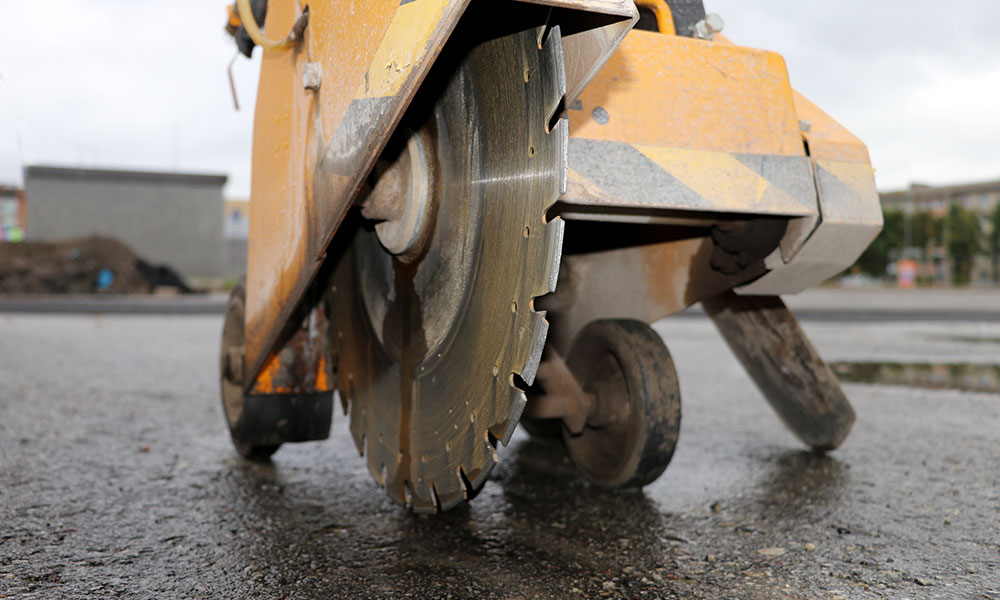
Instead of removing the entire pavement structure, specialized milling equipment grinds away a specified thickness of deteriorated asphalt.
This process can provide several financial advantages:
-
Reduced demolition expenses: Less pavement must be removed when deeper layers remain serviceable.
-
Lower material requirements: Existing structural layers can remain in place instead of being rebuilt.
-
Reduced hauling and disposal: Reclaimed asphalt may be transported for recycling rather than discarded.
-
More efficient project scheduling: Milling and resurfacing may require fewer construction activities than complete reconstruction.
-
Preserved infrastructure: Existing curbs, entrances, and surrounding pavement elevations may require fewer adjustments.
For a busy shopping center near Okeechobee Boulevard or a commercial office property in downtown West Palm Beach, minimizing unnecessary construction can also reduce disruption to normal business operations.
Actual savings depend on pavement condition, project size, milling depth, material specifications, and site access.
Local Field Observations: Why Palm Beach County Parking Lots Deteriorate
Commercial asphalt deterioration in Palm Beach County is strongly influenced by heat, moisture, traffic loads, and drainage conditions. These factors can gradually weaken pavement surfaces, making timely inspections and appropriate resurfacing decisions essential for property owners throughout South Florida.
The following are common regional pavement conditions rather than findings from a specific property inspection.
Prolonged heat and UV exposure
Florida’s intense sunshine can contribute to asphalt binder aging and oxidation. As pavement loses flexibility, surface cracking and raveling may develop.
Large uncovered parking lots in West Palm Beach are particularly exposed to these conditions.
Heavy seasonal rainfall
South Florida’s rainy season brings frequent downpours that can expose drainage deficiencies.
When water enters existing pavement cracks, it can contribute to deterioration of the asphalt and underlying layers.
Frequent commercial traffic
Shopping centers, office complexes, medical facilities, and industrial properties experience repeated vehicle loading.
Delivery trucks, waste collection vehicles, and frequent turning movements can create concentrated stress in specific parking lot areas.
Aging pavement surfaces
Older commercial lots may develop widespread surface wear even when their underlying pavement structure remains usable.
In these situations, milling followed by resurfacing may provide a more economical solution than complete reconstruction.
How Asphalt Milling Reduces Construction Waste
Asphalt milling reduces construction waste by recovering existing pavement material that can be processed and reused instead of automatically sending it to a disposal facility. This makes milling a practical option for Palm Beach County commercial property owners interested in conserving materials while maintaining functional parking areas.
The removed material is commonly called reclaimed asphalt pavement, or RAP.
After collection and processing, RAP can be incorporated into new asphalt mixtures when it meets the applicable material and project specifications.
Environmental benefits can include:
-
Reduced demand for newly quarried aggregates.
-
Reuse of existing asphalt binder contained in reclaimed material.
-
Less pavement material requiring disposal.
-
Reduced need for virgin construction materials.
-
Potential reductions in hauling and material-production impacts.
Recycling outcomes depend on where the reclaimed material is processed and how it is ultimately reused.
For commercial developments near Palm Beach International Airport, along Military Trail, or throughout the county’s retail corridors, recycling existing asphalt can support a more resource-efficient pavement improvement project.
Warning Signs Your Commercial Parking Lot May Need Milling
Commercial parking lots may benefit from asphalt milling when surface deterioration is widespread but the pavement foundation remains stable. In West Palm Beach, identifying these warning signs early can help property managers evaluate resurfacing before localized damage becomes more extensive.
Watch for the following conditions:
-
Widespread surface cracking: Numerous shallow cracks appear across traffic lanes or parking spaces.
-
Raveling asphalt: Loose aggregate and a rough surface indicate pavement material is breaking down.
-
Shallow surface depressions: Minor uneven areas collect water after rainfall.
-
Faded and worn pavement: Significant surface aging accompanies declining pavement condition.
-
Uneven pavement transitions: Parking lot entrances or adjoining surfaces have inconsistent elevations.
-
Repeated surface repairs: Frequent patching suggests broader deterioration requiring evaluation.
-
Poor surface drainage: Water remains in areas where the pavement grade may need correction.
Deep potholes, severe alligator cracking, substantial settlement, or recurring structural failures may indicate problems that milling alone cannot solve.
When Should Palm Beach County Businesses Call a Paving Professional?
Palm Beach County businesses should request a professional pavement evaluation when cracking, drainage problems, uneven surfaces, or recurring repairs begin affecting large portions of a commercial parking lot. A qualified assessment helps determine whether surface milling is appropriate or whether deeper pavement repairs are necessary.
Property managers can safely document visible cracking, ponding, and areas of repeated deterioration.
However, determining milling depth, base stability, drainage corrections, and resurfacing specifications requires professional evaluation.
For high-traffic properties in West Palm Beach, addressing these concerns before peak seasonal activity or major tenant operations can make project coordination easier.
Common Causes of Commercial Asphalt Damage in South Florida
The most common contributors to commercial asphalt deterioration in South Florida include moisture infiltration, heat-related aging, repeated vehicle loading, and inadequate pavement support. Understanding the cause matters because milling is most effective when surface deterioration can be corrected without leaving underlying structural problems untreated.
1. Moisture infiltration: Rainwater entering cracks can weaken pavement layers and underlying materials.
2. Asphalt oxidation: Prolonged exposure to sunlight and oxygen can make asphalt less flexible.
3. Heavy vehicle loading: Delivery vehicles and commercial trucks may create stress beyond what some parking areas were designed to handle.
4. Inadequate drainage: Standing water can accelerate deterioration and create operational concerns.
5. Base or subgrade instability: Weak underlying materials can lead to settlement and recurring pavement failures.
Commercial lots in Lake Worth Beach, Riviera Beach, and surrounding communities may experience different combinations of these conditions depending on pavement age, construction, drainage, and traffic.
Preventing Expensive Parking Lot Repairs Through Maintenance
Preventive parking lot maintenance helps Palm Beach County businesses control long-term paving expenses by addressing minor deterioration before it develops into larger pavement failures. Regular inspections, drainage maintenance, crack treatment, and appropriately timed resurfacing can help preserve the existing asphalt structure.
Practical maintenance steps include:
-
Inspect pavement after periods of heavy summer rainfall.
-
Keep storm drains and drainage inlets clear of debris.
-
Monitor cracks and repair suitable openings before water infiltration increases.
-
Check high-traffic entrances and loading areas for early deterioration.
-
Evaluate sealcoating when appropriate for the pavement’s condition.
-
Schedule periodic professional assessments to determine whether resurfacing or structural repair is needed.
For commercial properties in West Palm Beach, planning pavement work around tenant activity, deliveries, and seasonal rainfall can also help reduce inconvenience.
What Results Can Businesses Expect From Asphalt Milling?
Asphalt milling followed by properly designed resurfacing can improve pavement smoothness, surface consistency, drainage performance, and the appearance of commercial parking lots. In Palm Beach County, the results depend on existing pavement conditions, the selected milling depth, drainage design, and the quality of the new asphalt installation.
A successful milling and resurfacing project may provide:
-
A more uniform driving and parking surface.
-
Improved transitions between pavement sections.
-
Correction of certain surface-level drainage problems.
-
A prepared surface for a new asphalt overlay.
-
Reduced need for complete pavement reconstruction.
-
Opportunities to reuse reclaimed asphalt materials.
Milling does not automatically correct deep structural deficiencies. Areas with damaged base materials may still require full-depth repairs before resurfacing.
Common Asphalt Milling Mistakes That Increase Project Costs
Commercial asphalt milling becomes less cost-effective when property owners overlook structural damage, drainage conditions, or proper resurfacing requirements. Avoiding these mistakes helps Palm Beach County businesses make better decisions about pavement rehabilitation.
| Common mistake | Potential consequence | Better approach |
|---|---|---|
| Milling over an unstable base | Cracking and settlement may return | Evaluate and repair structural problems first |
| Ignoring drainage problems | Water continues collecting on the surface | Assess pavement grades and drainage outlets |
| Selecting milling depth without evaluation | Damaged material may remain | Determine depth based on pavement condition |
| Focusing only on the lowest bid | Important repairs or specifications may be omitted | Compare detailed scopes of work |
| Neglecting traffic planning | Customers and deliveries may be disrupted | Coordinate phased access and construction scheduling |
For busy commercial properties, proper planning is just as important as choosing the right pavement treatment.
Common Local Scenario: A Worn West Palm Beach Retail Parking Lot
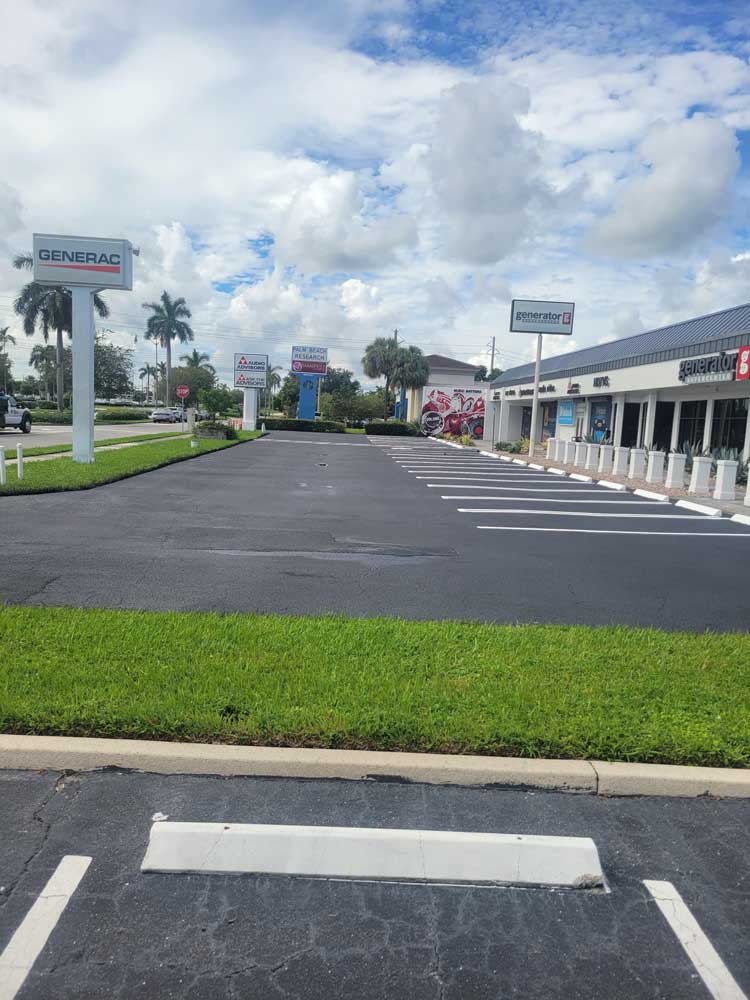
A common West Palm Beach retail parking lot scenario involves widespread surface cracking, faded asphalt, and shallow areas of standing water while much of the underlying pavement remains stable. In this situation, milling and resurfacing may be more practical than removing and rebuilding the entire parking lot.
Consider a hypothetical shopping plaza along Palm Beach Lakes Boulevard.
The parking lot has visible surface wear and recurring shallow puddles after heavy rain. However, a pavement evaluation finds that most of the underlying structure remains serviceable.
A possible improvement plan could include:
-
Inspecting the pavement and identifying areas requiring structural repair.
-
Milling the deteriorated surface to the specified depth.
-
Correcting localized deficiencies and evaluating drainage elevations.
-
Installing a properly designed asphalt overlay.
-
Reestablishing parking stall markings and traffic guidance after paving.
The property owner may avoid unnecessary full-depth reconstruction while restoring a more functional parking surface.
This is an illustrative local scenario, not a documented customer project.
Related Asphalt Services for Commercial Properties
Commercial asphalt services work together to correct pavement deterioration, maintain safe access, and extend the useful life of parking facilities. For Palm Beach County properties, the right combination depends on whether damage affects the surface, the pavement structure, or both.
Relevant services include:
-
Asphalt milling: Removes deteriorated pavement layers and prepares surfaces for rehabilitation.
-
Asphalt resurfacing: Installs a new asphalt layer over a properly prepared, structurally suitable surface.
-
Asphalt patching: Addresses localized damaged areas, including sections that require deeper repair.
-
Crack filling or sealing: Helps limit water infiltration through suitable pavement cracks.
-
Sealcoating: Provides a protective surface treatment when appropriate for the pavement.
-
Parking lot striping: Restores organized parking spaces, directional markings, and other pavement markings.
We can help commercial property owners evaluate pavement conditions and discuss which asphalt improvements fit their operational needs.
Asphalt Milling vs. Full Parking Lot Replacement
Asphalt milling is generally the better option when surface layers are deteriorated but the underlying pavement remains structurally sound. Full-depth replacement is more appropriate when substantial base failure, widespread structural cracking, or severe settlement makes preserving the existing pavement impractical.
| Consideration | Asphalt milling and resurfacing | Full-depth replacement |
|---|---|---|
| Existing pavement base | Retained where suitable | Removed or rebuilt as needed |
| Material requirements | Often lower | Typically higher |
| Construction waste | Existing asphalt can be recycled | More material is excavated |
| Project disruption | Often less extensive | Typically more extensive |
| Structural repair capability | Limited without additional repairs | Can address deeper failures |
| Upfront cost | Often lower when appropriate | Generally higher |
| Best application | Surface deterioration | Significant structural deterioration |
The lowest initial price does not always represent the best long-term value. A parking lot with underlying structural failure may need reconstruction even when milling initially appears less expensive.
Commercial Asphalt Milling Service Areas in Palm Beach County
Commercial asphalt milling is relevant to property owners throughout West Palm Beach and surrounding Palm Beach County communities, including Palm Beach Gardens, Riviera Beach, Lake Worth Beach, and Boynton Beach. Businesses in Boca Raton and nearby commercial corridors can also benefit from evaluating pavement rehabilitation options based on their property’s condition and traffic demands.
The Cost of Delaying Commercial Parking Lot Repairs
Delaying commercial parking lot repairs can allow moisture infiltration, surface cracking, and localized pavement damage to become more extensive. In Palm Beach County, recurring heavy rainfall and continuous traffic may increase the cost of future repairs when deteriorated pavement is left untreated.
What begins as manageable surface wear may eventually require deeper patching, drainage correction, or structural reconstruction.
Damaged parking areas can also create avoidable concerns for customer access, pedestrian movement, tenant satisfaction, and property appearance.
Addressing deterioration while the pavement foundation remains usable may preserve more repair options and help control future expenses.
Frequently Asked Questions About Asphalt Milling in Palm Beach County
1. Is asphalt milling cheaper than replacing a commercial parking lot in West Palm Beach?
Yes, asphalt milling and resurfacing are often less expensive than complete pavement replacement when the existing foundation remains structurally sound. Milling preserves usable layers and reduces unnecessary excavation and material replacement. However, significant base damage, poor drainage, or extensive structural cracking can change the cost comparison.
2. Can milled asphalt be recycled in Palm Beach County?
Yes, asphalt removed during milling can be recycled when suitable processing facilities and material specifications are available. Reclaimed asphalt pavement may be incorporated into new asphalt mixtures or used in other approved applications. Recycling reduces waste and can decrease demand for newly produced paving materials.
3. How long does commercial asphalt milling take?
Commercial asphalt milling may take a day or several days, depending on parking lot size, milling depth, equipment access, and site conditions. Resurfacing, repairs, curing requirements, and striping add to the overall project schedule. Busy West Palm Beach properties may benefit from phased construction to maintain access.
4. Does asphalt milling fix drainage problems in Florida parking lots?
Asphalt milling can help correct certain drainage problems by allowing adjustments to surface elevations before new asphalt is installed. However, drainage problems caused by inadequate outlets, underground infrastructure, or major settlement may require additional work. A professional evaluation should identify the underlying cause before paving begins.
5. How do I know if my Palm Beach County parking lot needs milling or replacement?
A pavement assessment is the best way to determine whether milling or replacement is appropriate. Surface-level cracking, oxidation, and raveling may be addressed through milling and resurfacing. Widespread structural cracking, severe settlement, and unstable base materials may require deeper repairs or complete reconstruction.
6. Is asphalt milling environmentally friendly?
Asphalt milling can reduce environmental impacts by recovering existing pavement for reuse and preserving structural layers that do not need replacement. Recycling reclaimed asphalt can reduce demand for virgin aggregates and asphalt binder. Actual environmental benefits depend on material processing, transportation distances, recycling rates, and project design.
7. Can businesses remain open during asphalt milling in West Palm Beach?
Yes, some businesses can remain operational during asphalt milling when the site layout allows safe, phased construction. Parking areas, entrances, and traffic routes may need temporary restrictions. The feasibility depends on equipment access, project size, customer circulation, and the ability to separate active construction from public traffic.
8. What is the best time of year for asphalt milling in Palm Beach County?
Asphalt milling can be scheduled during different parts of the year, but weather and business activity should guide planning. South Florida’s rainy season can create scheduling challenges for paving operations. Drier weather windows, suitable installation conditions, and coordinated access plans can help minimize disruptions.
9. How much asphalt should be removed during milling?
The appropriate milling depth depends on the thickness and condition of existing pavement, the extent of deterioration, drainage elevations, and resurfacing requirements. Removing too little may leave damaged material in place, while unnecessary deeper milling increases costs. The depth should be determined through a pavement evaluation.
10. Will asphalt milling extend the life of a commercial parking lot?
Asphalt milling followed by appropriate repairs and resurfacing can extend a parking lot’s useful service life when the underlying pavement structure remains sound. The outcome depends on traffic loads, drainage, materials, installation quality, and future maintenance. Milling alone does not provide a new wearing surface or correct every pavement defect.
Make a Smarter Investment in Your Commercial Parking Lot
Asphalt milling gives Palm Beach County commercial property owners an opportunity to reduce unnecessary reconstruction expenses, recover reusable materials, and restore worn pavement surfaces. The key is determining whether the existing pavement structure can support a cost-effective resurfacing project.
At our West Palm Beach business, we understand the importance of maintaining functional parking areas while considering budgets, traffic access, and South Florida’s demanding weather conditions.
Protect Your Palm Beach County Parking Lot While Controlling Paving Costs
Get a clearer understanding of your pavement’s condition and whether milling, resurfacing, or more extensive repairs make sense for your commercial property.